


Page 136 - EMEK 2020
P. 136
V-011
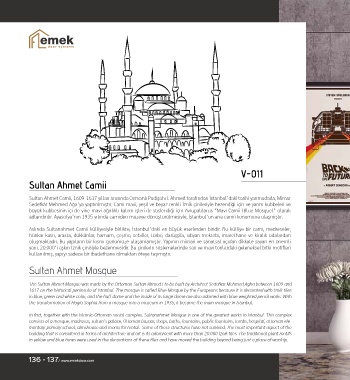
            Sultan Ahmet Camii


            Sultan Ahmet Camii, 1609-1617 yılları arasında Osmanlı Padişahı I. Ahmed tarafından İstanbul’daki tarihî yarımadada, Mimar
            Sedefkâr Mehmed Ağa’ya yaptırılmıştır. Cami mavi, yeşil ve beyaz renkli İznik çinileriyle bezendiği için ve yarım kubbeleri ve
            büyük kubbesinin içi de yine mavi ağırlıklı kalem işleri ile süslendiği için Avrupalılarca “Mavi Camii (Blue Mosque)” olarak
            adlandırılır. Ayasofya’nın 1935 yılında camiden müzeye dönüştürülmesiyle, İstanbul’un ana camii konumuna ulaşmıştır.

            Aslında Sultanahmet Camii külliyesiyle birlikte, İstanbul’daki en büyük eserlerden biridir. Bu külliye bir cami, medreseler,
            hünkar kasrı, arasta, dükkânlar, hamam, çeşme, sebiller, türbe, darüşşifa, sıbyan mektebi, imarethane ve kiralık odalardan
            oluşmaktadır. Bu yapıların bir kısmı günümüze ulaşamamıştır. Yapının mimari ve sanatsal açıdan dikkate sayan en önemli
            yanı, 20.000’i aşkın İznik çinisiyle bezenmesidir. Bu çinilerin süslemelerinde sarı ve mavi tonlardaki geleneksel bitki motifleri
            kullanılmış, yapıyı sadece bir ibadethane olmaktan öteye taşımıştır.

            Sultan Ahmet Mosque


            The Sultan Ahmet Mosque was made by the Ottoman Sultan Ahmed I to be built by Architect Sedefkar Mehmed Agha between 1609 and
            1617 on the historical peninsula of Istanbul. The mosque is called Blue Mosque by the Europeans because it is decorated with Iznik tiles
            in blue, green and white color, and the half-dome and the inside of its large dome are also adorned with blue-weighted pencil works. With
            the transformation of Hagia Sophia from a mosque into a museum in 1935, it became the main mosque in Istanbul.

            In fact, together with the Islamic-Ottoman social complex, Sultanahmet Mosque is one of the greatest works in Istanbul. This complex
            consists of a mosque, madrasas, sultan’s palace, Ottoman bazaar, shops, baths, fountains, public fountains, tombs, hospital, ottoman ele-
            mentary-primary school, almshouse and rooms for rental.  Some of these structures have not survived. The most important aspect of the
            building that is considered in terms of architecture and art is its adornment with more than 20.000 İznik tiles. The traditional plant motifs
            in yellow and blue tones were used in the decorations of these tiles and have moved the building beyond being just a place of worship.


            136 - 137/  www.emekdoor.com

